Industry-Academia-Research Collaboration Breaks the "Enamel Explosion" Bottleneck
For a long time, the risk of "enamel explosion" (glass lining failure) has been a critical pain point limiting the lifespan and safety of glass-lined reactors in the pharmaceutical and chemical industries. Recently, this challenge has seen a milestone breakthrough.
Shandong Te'an Inspection Group, in collaboration with Yantai University and Zibo Taiji Industrial Enamel Co., Ltd., has successfully developed a new generation of high-performance enamel glaze formulas through deep collaborative research. Experimental verification shows that core indicators, such as bending resistance and fracture toughness, exceed national standards by 1.5 to 2 times, fundamentally solving the traditional issue of equipment failure after two years of use.
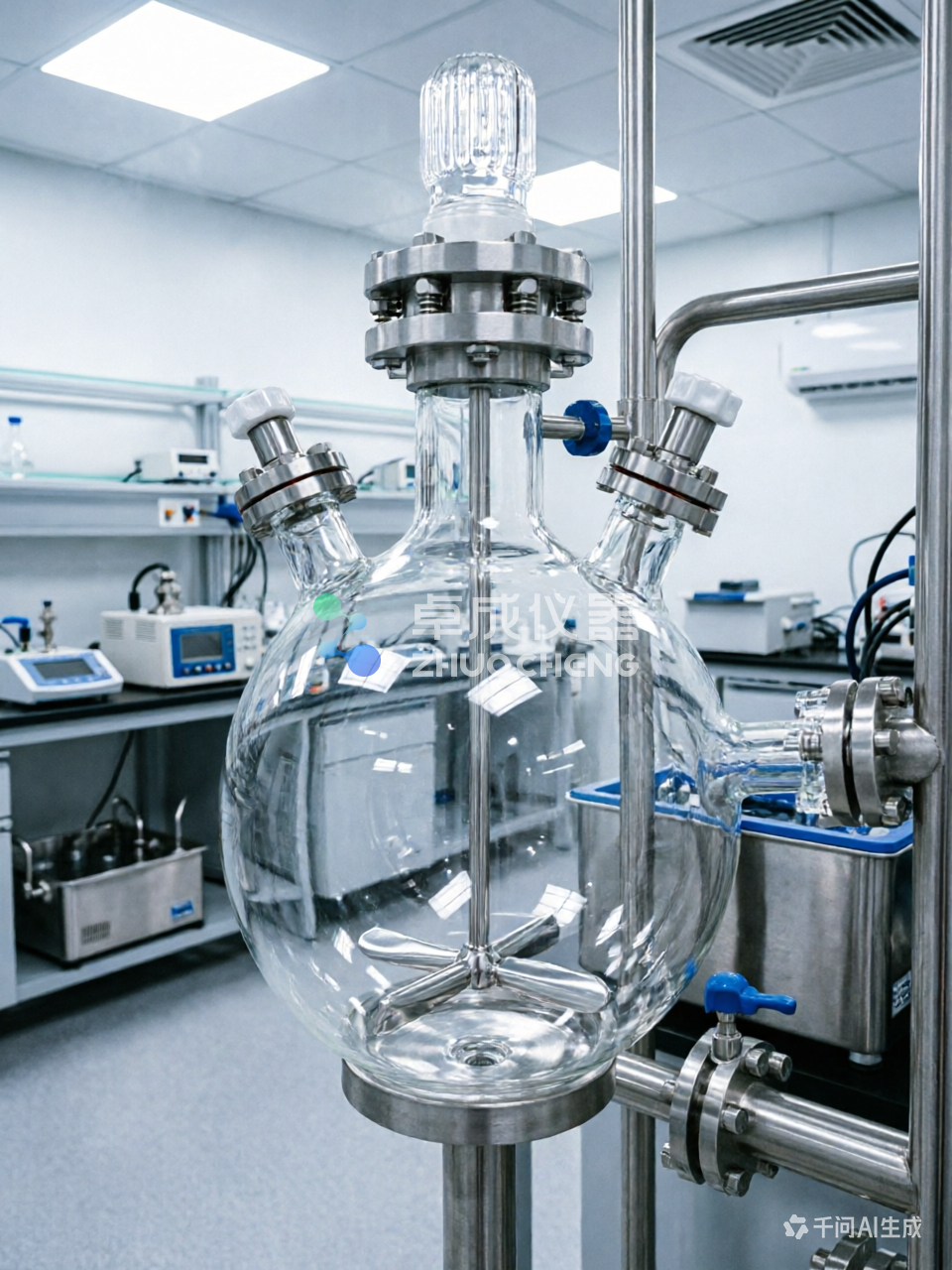
Currently, this research has been efficiently commercialized by leading enterprises. Zibo Taiji has introduced specialized automated production systems and advanced DON slow-firing processes to upgrade manufacturing intelligence, significantly improving product stability. Meanwhile, Shandong Te'an has established a scientific evaluation system covering the equipment's full lifecycle. This "University Innovation + Inspection Technology + Enterprise Application" model provides a replicable "Zibo Solution" for the high-quality development of the national enamel industry.
Intelligence & Modularity: Reshaping the Value Chain
As Industry 4.0 concepts deepen, the glass reactor industry is accelerating its transition from hardware manufacturing to a "Manufacturing + Service" ecosystem.
Digital Twins & Predictive Maintenance: Represented by Nantong Planet Graphite's "TGL-Cloud" platform, digital twin technology is now accessing operational data from reactors in the field. By using machine learning to identify abnormal energy consumption and potential enamel risks, it has helped users reduce unplanned downtime by an average of 37%. Wuxi Qianqiao's "TGL-SmartCare" platform goes further, utilizing multimodal sensor arrays to monitor temperature gradients and micro-strain, reducing downtime by 41%.
Modular Design: To address low equipment utilization, Xiaohan Industrial has introduced modular quick-change interfaces for stainless steel reactors. This allows a single vessel to adapt to electric heating, high-pressure, or polymerization processes. In a real-world case, 3 modular reactors successfully replaced 8 specific-function units, reducing costs by 45% and saving 60% of floor space.
Niche Patents Solve Specific Pain Points
Beyond macro trends, technical micro-innovations are solving long-standing efficiency issues through patents.
Anti-Scaling: Shandong Ruicheng Chemical Equipment recently obtained a patent for a "Glass-lined Reactor with Anti-Caking Structure." It features a stirring and wall-scraping component with streamlined scrapers that remove material sticking to the inner wall in real-time, ensuring reaction uniformity.
Acid Concentration: Dalian Hannuo Engineering Technology acquired a patent for a "Glass-lined Reactor for Dilute Sulfuric Acid Concentration." Its design features spiral heating resistors and cooling jackets working in synergy to achieve rapid, uniform temperature control.
Nanomaterials: Zhengzhou Greatwall Scientific Industrial and Trade Co., Ltd. has launched a "Ultrasonic-Enabled" customized glass reactor. By integrating high-intensity ultrasonic energy fields, it utilizes cavitation effects to break up nanoparticle agglomeration, reducing reaction time from hours to minutes.
Market Segmentation & High-End Demand
The market is showing significant differentiation. While traditional chemical demand is gradually decreasing, the pharmaceutical sector now accounts for 28.5% of high-end reactor demand, driven by GMP upgrades and innovative drug R&D.
Notably, emerging applications in new energy materials (e.g., lithium iron phosphate precursor synthesis) and bio-based chemicals are becoming new growth engines. Borosilicate glass reactors, favored for their chemical stability and visibility, now account for 79% of procurement in the pharmaceutical field. As environmental policies tighten, high-end products featuring green manufacturing, intelligent control, and compliance design will continue to lead the industry toward the high end of the value chain.

 微信公众号
 官方抖音账号